PH and SG push for greater trade cooperation within ASEAN. Department of Trade and Industry (DTI) Philippine Trade & Investment Centre (PTIC) – Singapore Commercial Counsellor Glenn Peñaranda talks about the Philippines' hosting of the ASEAN and its Business and Investment Program (ABIP) with the Singapore International Chamber of Commerce (SICC). SICC invited Peñaranda in its March 2017 ASEAN Committee meeting. Peñaranda further shared the agenda of steering the ASEAN to full economic integration through greater trade and investment among member countries and detailed the DTI's ABIP events that will complement the country's priorities under the ASEAN Economic Community pillar. Peñaranda covered as well the latest investment climate and opportunities in the country, highlighting the strong presence of Singapore businesses in various sectors. The SICC is the first business chamber in Singapore. Its key themes are on ASEAN, innovative collaboration, realities of the present and sustainability of Singapore. The Chamber celebrated its 180th in February of this year. In photo: (L-R) Philip Pang, Singapore International Chamber of Commerce (SICC) Director for Government Relations; Philippine Commercial Counsellor Glenn Peñaranda; Philippine Ambassador to Singapore Antonio Morales; Victor Mills, SICC Chief Executive.
Friday, March 24, 2017


Friday, March 17, 2017
Cesar Montano still goes to work at TPB amid complaint
Cesar Montano still goes to work amid complaint
By Azer N. Parrocha
MANILA, March 16 (PNA) -- It's business as usual for Tourism Promotions Board (TPB) Chief Operating Officer (TPB) Cesar Montano who continues to work despite a complaint filed against him by his staff on alleged irregularities.
Tourism Secretary and TPB Chairman Wanda Teo, who recently arrived from an expo in Berlin, Germany, said that Montano remained as chief of the DOT's marketing arm.
"He still goes to the office," Teo told reporters on the sidelines of the 2017 ASEAN-China Year Tourism Cooperation held at the Philippine International Convention Center in Pasay City on Thursday.
She refused to comment when asked if she still "trusted" Montano as Pres. Rodrigo Duterte previously stated in a speech.
The Secretary previously admitted that Montano was not her first choice to head the TPB.
On Monday (March 13), Pres. Duterte said that he still trusted Montano amid allegations and urged officials to file a case.
The Secretary reiterated that the agency would await results of the investigation being conducted by the Presidential Action Center (PACE) where the complaint was filed.
She said that she had no plans for her agency to conduct its own investigation as the Senate also eyed its own probe on the issue.
Asked if she was aware of the allegations even before the complaint was filed, Teo said that she has read them in the newspapers.
In the seven-page letter of complaint filed at the PACE, Montano was accused of irregularities including entering into multimillion peso deals without approval from the board, hiring his own staff whose functions were redundant with current employees and the questionable use public funds.(PNA)
Wednesday, March 15, 2017
Japanese Companies investment interests in the Philippines
Department of Trade and Industry (DTI) Secretary Ramon M. Lopez met with senior executives of Japan's seven major trading houses in Tokyo recently (March 1, 2017) to discuss President Rodrigo Duterte's economic programs and Japanese Companies investment interests in the Philippines, conservatively valued at Php198.5B.
During a breakfast dialogue, Lopez—together with Transportation Secretary Arthur Tugade and PH Ambassador-Designate Jose Laurel V—got together with representatives of the sogo shoshas or Japanese companies with a broad range of business activities. Companies present at the meeting were Mitsubishi Corporation, Mitsui and Co., Ltd., Sumitomo Corporation, Itochu Corporation, Marubeni Corporation, Toyota Tsusho, and Sojitz.
"Through sound and consistent macroeconomic policies, the country continues to attract serious investments. The fundamentals are there in terms of a fast-growing economy, a 109-million population base, standing trade agreements, and a young, talented, and dedicated work force," Sec. Lopez said on the Japanese companies' willingness to investment in the Philippines.
"All these—plus political will and focused trade and investment policies—act as a magnet for foreign investments," Sec. Lopez added.
The investment interests of the sogo shoshas would cover the period spanning late 2016 to 2020, and include:
- Marubeni willing to invest in additional coal power plants worth Php75B over the medium term;
- Itochu and Sumitomo (through PH subsidiaries Dole and Sumifru respectively) willing to invest an additional Php12.9B through 2018 to expand their integrated farming projects in Mindanao;
- Sumitomo, Sojitz, and Mitsui jointly invested in Coral Bay Nickle Corporation and Taganito High Pressure Acid Leaching (THPAL) Nickle Corporation in Surigao and Palawan, at a cost of Php80B;
- The CARS program, under the DTI-driven Manufacturing Resurgence Strategy, enjoying the support and participation of Mitsubishi, Sojitz, Mitsui, and Toyota Tsusho; and,
- All 7 trading houses expressing interest in the Philippines' "Golden Age of Infrastructure," i.e. the Railway and Subway Projects, the Clark Green City Project, the Expanded Port and RoRo Building Programs, and the Airport Development Projects.
"With DTI's inclusive business model, our resource-based country has the potential to become a major supplier to the world by fostering value chain linkages and partnerships between the MSMEs as suppliers of goods and services, and the large enterprises as buyers," Sec. Lopez said.
When asked about the Philippine government's mining and tax policies, Secretaries Tugade and Lopez responded that government reforms are being crafted along balanced and fair consideration of both industry and consumer interests.
They also assured investors that with public sector agencies rigidly adhering to President Rodrigo Duterte's zero corruption dictum, projects would receive adequate protection and fair treatment.
The two officials likewise encouraged the Japanese trading houses to use their expansive business systems to help in planning an efficient set of economic infrastructure, such as farm-to-market roads, bridges, seaports, airports, railways for cargo, passengers and RORO vessels, and service providers.
Philippines hosting ASEAN Economic Ministers’ Meeting
MAKATI—The Philippines successfully advocated its trade priorities in ASEAN as the country's hosting of the ASEAN Economic Ministers' Meeting (AEM) Retreat and Related Meetings ends (10 March), laying the groundwork for the 49th AEM in September.
The Department of Trade and Industry (DTI) led by Secretary Ramon Lopez secured endorsements from ASEAN Economic Ministers on the timely realization of Philippine priority deliverables for 2017.
"Aside from championing our trade agenda as a country, we are also able to advance the economic agenda of our fellow ASEAN Member States (AMS); thus, bringing our domestic interest to the regional platform," said Sec. Lopez, who chaired the AEM Retreat and Related Meetings, adding that AMS' endorsements will strengthen the implementation of the ASEAN Economic Community (AEC) Blueprint 2025.
"Our objective is to make AEC work and to make AEC felt in the day-to-day experience of Filipinos," said Philippine lead Undersecretary Ceferino Rodolfo, who presented before the Meeting the summary of priority deliverables.
Innovative, inclusive growth
"The Philippines is taking the lead in seeking new policy interventions that are expected to contribute towards helping MSMEs harness the opportunities presented by open and increasingly integrated markets," said Sec. Lopez.
A self-certification scheme for Micro, Small and Medium Enterprises (MSMEs) will allow the sector to partake in the benefits of the free trade agreements, while the action agenda on investment, inclusive business and women and youth entrepreneurship will strengthen the investment linkages between MSMEs and Multinational Enterprises (MNEs)—a thrust that Sec. Lopez has been pushing in the domestic front to foster inclusive development towards shared prosperity for all.
Aligned with the inclusive growth agenda is the endorsement of the ASEAN Declaration on Innovation, which advocates for an enabling ecosystem that supports entrepreneurial activities in technology and innovation.
"Inclusive business will allow companies to engage the poor and low-income communities as partners, customers, suppliers, and employees in their supply chains because it makes good business sense," added Usec. Rodolfo.
Connectivity, services, private sector
The AEM Retreat also touched on the launching of the Davao-General Santos-Bitung route of the ASEAN Roll-on Roll-off (RORO) Network, a system that will both enhance intra-regional connectivity and bolster socio-economic growth in the regions.
On the services sector, the endorsement of the ASEAN Trade in Services Agreement (ATISA) means fostering a more transparent trade in services, boosting further contribution and competitiveness of the services sectors in ASEAN.
The meeting also explored on convening regular dialogue with the private sector to highlight its business priorities and recommendations, as well as identify ways to complement existing public efforts toward taking full advantage of opportunities under the AEC.
"Public-private sector engagement not only reduces the gap of understanding of the private sector and the general public on ASEAN, it also promotes intra-ASEAN and global trade and investment and reduces current and future impediments faced by business enterprises," Sec. Lopez added.
ASEAN-driven RCEP
The AEM Retreat discussed preparations for the 50th anniversary of the ASEAN, which coincides with the Philippines' ASEAN chairmanship.
An equally relevant element of this chairmanship is the push to achieve considerable progress on the Regional Comprehensive Economic Partnership (RCEP), showcasing ASEAN's headship in bringing about a regional partnership that integrates major economic players China, Japan, India, Korea, Australia and New Zealand.
The shared optimism on RCEP will mean more foreign investments and more dynamic trade and business alliances. As noted by DTI, RCEP will expand the ASEAN market of 600 million to 3.5 billion as it will include ASEAN's six Dialogue Partners—that accounts for almost half of the world's population, representing a huge integrated market base.
This expanded economic partnership is seen to shape the future of trade and economic liberalization in Asia. At the backdrop of recent economic uncertainties and rising protectionism, RCEP is poised to keep the momentum of trade as an engine for regional and global economic growth.
"The chairmanship is an event to strengthen the enduring ties that bind us all and an important occasion to reaffirm the shared aspirations and values which will lead us to our envisioned integration come 2025," Usec. Rodolfo concluded.
The Philippine hosting of the ASEAN Summit to be chaired by President Rodrigo Duterte will be held next month, while the bigger meeting 49th AEM is scheduled in September 2017.
ASEAN Economic Ministers' Retreat Meeting and Related Meetings
PREPARATORY MEETING FOR THE ASEAN ECONOMIC MINISTERS' RETREAT MEETING. Senior trade officials from 10 ASEAN Members States (AMS) met on 8 March 2017 to refine points of discussion and agenda items for the ASEAN Economic Ministers' Retreat Meeting and Related Meetings to be held tomorrow, 9 March. Increasing trade and investment, integrating the micro, small and medium enterprises (MSMEs) in the global value chains and developing an innovation-driven economy are the identified measures to complement the thematic priority on inclusive, innovation-led growth, as the Philippines chairs ASEAN this year on its 50th anniversary. From Left to Right: Lao PDR - Ministry of Industry and Commerce Deputy Director General Sayakone Saysana, Malaysia - Ministry of International Trade and Industry Deputy Secretary General Datuk Isham Ishak, Myanmar - Ministry of Finance Htun Zaw Deputy Director General, Thailand - Department of Trade of Negotiations Deputy Director General Ronnarong Phoolpipat, Vietnam - Ministry of Industry and Trade Deputy Director General Nguyen Thi Quynh Nga, Philippines - Department of Trade and Industry, Assistant Secretary Anna Maria Rosario D. Robeniol, Singapore - Ministry of Trade and Industry Director Sulaimah Mahmood, Brunei - Ministry of Foreign Affairs and Trade Assistant Director Narussa'adah Muraharram, Cambodia - Ministry of Commerce Deputy Director General Prasith Suon,Indonesia - Ministry of Trade Director Donna Gultom, ASEAN Secretariat Deputy Secretary General Hong Hin Lim.
ASEAN Economic Ministers Meeting in the Philippines
The Department of Trade and Industry (DTI) is poised to champion the Philippine trade agenda as it takes helm of the ASEAN Economic Ministers Meeting (AEM) Retreat and Related Meetings on 8-10 March 2017 to be participated in by the 10 trade ministers from ASEAN Member States (AMS).
As lead agency for the ASEAN Economic Community (AEC) Pillar, DTI led by Secretary Ramon Lopez will promote one of the current thematic priorities of ASEAN on "inclusive, innovation-led growth" for shared prosperity. The other two pillars touch on politico-security and socio-cultural.
Increasing trade and investment, integrating the micro, small and medium enterprises (MSMEs) in the global value chains and developing an innovation-driven economy are the identified measures to achieve said priority.
"Our strategic measures are consistent with our current agenda to promote employment and entrepreneurship. The AEM is an excellent platform to push for the country's core thrusts on trade and investment, MSME development and innovation," said Sec. Lopez, who will serve as the chair of AEM Retreat and Related Meetings.
The trade chief, however, ensured that his meeting's chairmanship will be "fair, workable, rational and inclusive" among AMS.
The AEM aims at strengthening partnership with stakeholders to expand knowledge and utilization of ASEAN-related free trade and economic agreements, provisions and initiatives, including the benefits that an ASEAN national can receive.
The trade chief aims to give meaning to these highly-technical engagements, in a manner that ASEAN nationals, including the Filipinos, can identify how they can benefit from the opportunities posed by regional integration without fear and hesitation.
"It's time for us to make people feel that their membership in ASEAN is relevant to their day-to-day experience," he said, adding that DTI's hosting also presents good opportunity to raise awareness, to promote understanding on the AEC and the Philippine participation in it, and to re-tell the country's growth story.
On increasing trade and investment, Sec. Lopez emphasized that the creation of a sound policy environment and the right mix of support programs are crucial to improve the capacity of businesses to expand, upgrade and diversify. He mentioned that the Regional Comprehensive Economic Partnership (RCEP), an agreement involving the 10 AMS and the six Dialogue Partners will expand the ASEAN market from 600 million to 3.5 billion. DTI will be pushing for the substantial conclusion of RCEP by year-end at the AEM, according to him.
On MSME development, Sec. Lopez said that the thrust continues for instituting an enabling environment that allows the sector to develop and internationalize through e-commerce, as well as policies that ease the cost of doing business and provide skills and business training and facilitate the link with the global value chain.
The country will also prod ASEAN to embrace the evolving digital technology as leverage to enhance trade and investment, to provide an e-based business platform and to promote good governance and green technology.
"We hope to gather, harmonize and mobilize public-private efforts towards taking full advantage of opportunities under the AEC," he concluded.
ASEAN 2017 bears the theme, "Partnering for Change, Engaging the World", which is in line with President Rodrigo Duterte's objective to enhance cooperation with global partners, ensuring that ASEAN citizens, including the Filipinos, can live in peace, stability, security and growth, despite cultural diversities.
Following the AEM Retreat and Related Meetings is the ASEAN Summit in April to be chaired by President Duterte. The bigger meeting 49th AEM, meanwhile, is scheduled in September 2017.
Sunday, March 12, 2017
Provincial administrator reprimanded for failing to reply to letters
10 March 2017
Atty. Premolito Plaza, the Provincial Administrator of Surigao Del Norte, was reprimanded by the Office of the Ombudsman for failing to reply to the letters of a certain Benjie Ruperto Latras, a provincial employee reassigned to the Sta. Monica District Hospital.
According to the complaint, Latras wrote Plaza on 08 June 2015 requesting relief from property accountability of the properties under his custody prior to his reassignment to the district hospital. A follow-up letter was made on 21 November 2015, however, both letters were ignored.
"There is substantial evidence to prove that Plaza failed to respond to complainant's letters. His contention, without other corroborating evidence, that he verbally advised complainant on the procedure of turning over the properties under his charge, is without merit," read the Decision.
The Decision also added that "by failing to act on complainant's letters-request, respondent Plaza unjustifiably failed to attend to one who wanted to avail himself of the services of the provincial office."
Under Section 5(a) of the Code of Conduct and Ethical Standards for Public Officials and Employees (Republic Act No. 6713), it is the duty of public officials to "act promptly on letters and requests within 15 working days from receipt thereof, respond to letters, telegrams or other means of communications sent by the public. The reply must contain the action taken on the request.
Ombudsman dismisses five executives for P3.8M PDAF scam
Ombudsman dismisses five executives for P3.8M PDAF scam
The Office of the Ombudsman is not letting up on its investigation into the Priority Development Assistance Fund (PDAF) scam. Ombudsman Conchita Carpio Morales has ordered the dismissal and perpetual disqualification from holding public office of five executives of the National Commission on Muslim Filipinos (NCMF). Found guilty of Grave Misconduct and Conduct Prejudicial to the Best Interest of the Service are Secretary/Commissioner Mehol Sadain, Director III Galay Makalinggan, Acting Chief Accountant Fedelina Aldanese, Acting Chief Aurora Aragon-Mabang, and Cashier Olga Galido.
In case of separation from the service, the penalty is convertible to a fine equivalent to respondent's one year salary.
The NCMF officials are also facing trial before the Sandiganbayan for violation of Section 3(e) of Republic Act No. 3019 (Anti-Graft and Corrupt Practices Act) for the anomalous utilization of the PDAF of the former Maguindanao Representative Simeon Datumanong.
In-depth investigation uncovered that in May 2012, the Department of Budget and Management issued a Special Allotment Release Order covering P3,800,000.00 in favor of NCMF, as implementing agency, charged against Datumanong's PDAF. The money was intended to finance livelihood programs such as soap making, candle making and meat processing for the municipalities of Mamasapano, Ampatuan and Datu Abdullah Sanki.
To facilitate the fund utilization, Datumanong requested that the P3.8million be coursed through the Maharlikang Lipi Foundation, Inc. (MLFI), as NGO-partner.
Upon audit, the Commission on Audit found that the selection of the NGO was undertaken in violation of COA Circular No. 2007-01 noting the absence of public bidding in the NGO-selection process.
In its Decision, Ombudsman Morales ruled that "respondents participated in the preparation, processing and approval of the Memorandum of Agreement and the PDAF documents governing the project implementation and fund releases to MLFI." She added that "the funds in question could not have been transferred to the MLFI if not for the recommendations as well as certifications, approval, and signatures found in the corresponding disbursement vouchers and checks."
To support the charges, the Ombudsman said that there was "extraordinary accommodation extended to MLFI in the examination, processing and approval by the concerned NCMF officers of the PDAF releases as show by the unnumbered and undated disbursement vouchers; and issuance of check prior to execution of the Memorandum of Agreement."
This is the second set of PDAF charges filed against Sadain. In September 2016, Sadain was charged alongside Senator Gregorio Honasan II for the anomalous utilization of Honasan's P30million PDAF.
Wednesday, March 8, 2017
CBCP saddened by passage of death penalty bill at lower house
CBCP saddened by passage of death penalty bill at lower house
By Ferdinand G. Patinio

MANILA, March 7 (PNA) -- The Catholic Bishops' Conference of the Philippines (CBCP) is standing firm on its opposition to the death penalty.
In a statement, CBCP president Archbishop Socrates Villegas said they were saddened by the decision of the House of Representatives to approve on third and final reading the bill reviving the death penalty.
"The House of Representatives has given its consent for the State to kill. We, your bishops, are overcome with grief but we are not defeated, nor shall we be silenced," he said.
"In the midst of Lent, we prepare to celebrate the triumph of Life over Death, and while we grieve that the Lower House has voted for death, our faith assures us that Life will triumph."
At the same time, Villegas urged Filipinos to continue to express their opposition to the proposed measure.
"We call on all Catholic faithful and all Filipinos who stand for life to continue the spirited opposition to the death penalty," he said.
He likewise called on the judiciary to support the Gospel of Life.
"We urge Catholic lawyers, judges and jurists to allow the gentleness of the Gospel of Life to illumine their reading and application of the law, so that their service to society as teachers and agents of the law and of justice may bring life," the CBCP chief said.
On Tuesday, 216 members of the House said 'yes' to the reimposition of the capital punishment, while 54 lawmakers said 'no' and one abstained. (PNA)
Philippine Army to acquire force protection equipment, sniper rifles
SBMS still on go but PA to acquire force protection equipment, sniper rifles first
By Priam F. Nepomuceno
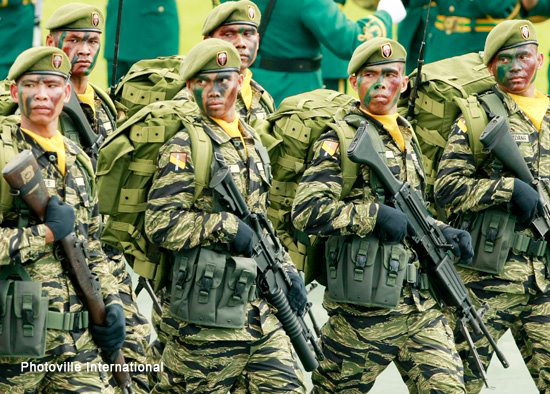
MANILA, March 7 (PNA) --- Acquisition of the country's shore-base missile system (SBMS) is still on go but the Philippine Army (PA) will first prioritize the procurement of additional force protection equipment, sniper rifles and first-aid kits for its troopers.
This was disclosed by PA commander Lt. Gen. Glorioso Miranda in a recent interview
"(We are looking and evaluating the possible SBMS) design, however in the manner of how we implement it (acquisition), it has to conform, say for example with the requirement of the current operational environment, like now, we are prioritizing (the acquisition) of equipment for the welfare and benefit of our soldiers like force protection equipment, (ballistic) helmets to increase their survivability and we are also investing in training to make them more proficient (in combat)," he said in Filipino.
"The SBMS remains on the list but I don't see that it is necessary for us to procure it in the meantime," Miranda said.
Other needs of the troops being acquired right now are sniper rifles, first-aid kits.
Miranda said the PA would proceed on acquiring its big-time ticket items when the proper time comes.
In 2015, then Armed Forces of the Philippines chief-of-staff Gen. Hernando DCA Iriberri requested the Php 6.5- billion SBMS project to be moved to the AFP Modernization Program Second Horizon as the more pressing needs then was the acquisition of force protection equipment, sniper rifles and radioes.
The SBMS will be acquired to beef up the external defense capabilities of the PA and not aimed at any particular nation.
The SBMS consists of 12 launchers, trailers and tracking systems and missiles that could be fired to neutralize ground and naval targets.
And in its place, force protection equipment, squad designated rifles and modern radios.
The AFP's Modernization Program is divided into three horizons, with the first lasting from 2013 to 2017, the second from 2018 to 2022 and third 2023 to 2028. (PNA)
Subscribe to:
Posts (Atom)